
IoT Intelligence
Telemetry, connected assets, anomaly detection, and real-time operational response.
Open IoT PageCapabilities
This page brings together AstraSkyAI's emerging high-value capability areas into one operating view. Explore Industrial IoT, Military Drone Systems, and Satellite & Space Systems through a single lens.
Capability Overview
Each capability area is designed to solve a different mission environment while still fitting into AstraSkyAI's broader delivery model around software, AI, security, and resilient operations.
Telemetry, connected assets, anomaly detection, and real-time operational response.
Open IoT Page
Secure autonomy, mission control, surveillance support, and command-link reliability.
Open Military Page
Mission software, earth observation workflows, and secure ground-segment operations.
Open Satellite PageCapability Model
These areas all rely on live data, secure communications, operator visibility, and AI-assisted decision loops. That makes them stronger when shaped as one coordinated capability stack.
IoT Intelligence
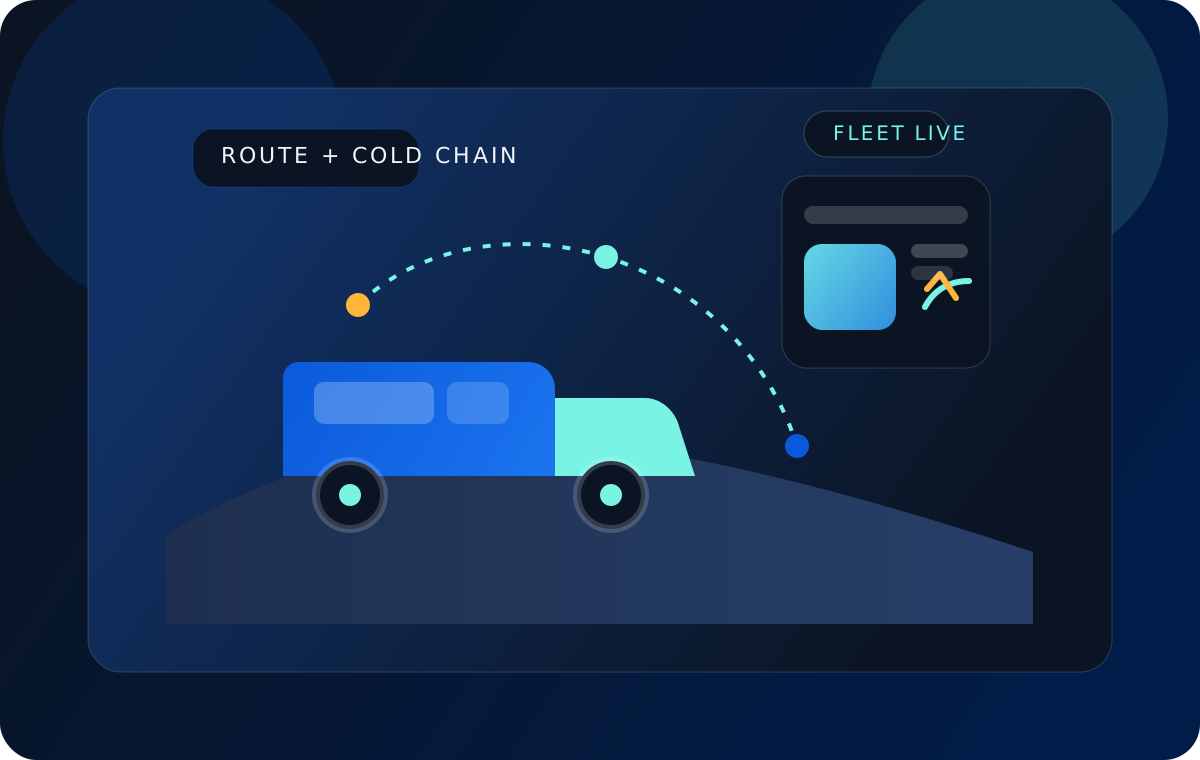
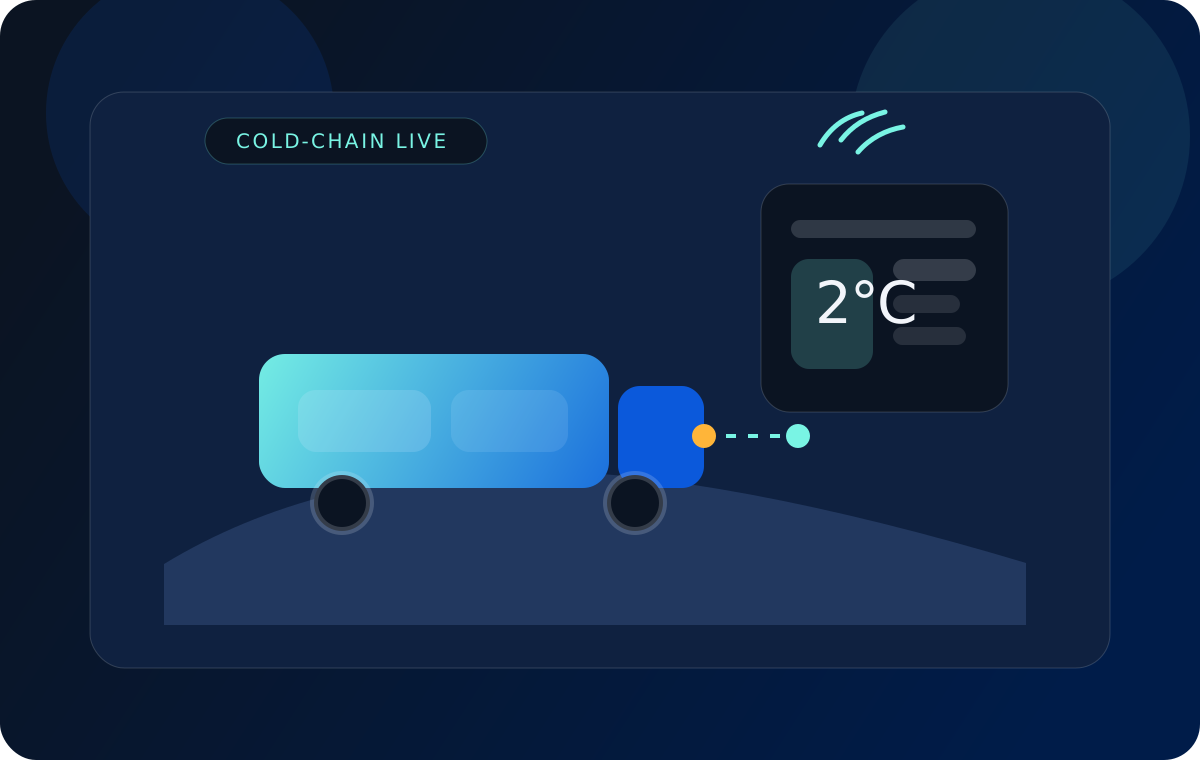
AstraSkyAI's IoT capability focuses on turning continuous field signals into operational clarity, anomaly detection, maintenance triggers, and response workflows.
Bring devices, gateways, and assets into one secure data layer.
Interpret live signals with AI-assisted rules and trend analysis.
Move from alerts to operator tasks, maintenance actions, and dashboard visibility.
Military Drone Systems
This capability area is shaped around defense-grade autonomy, navigation intelligence, payload readiness, encrypted communications, and mission execution visibility.
AI-assisted routing, threat-aware navigation, and supervised autonomous flight logic.
Secure communication links, operator consoles, and mission coordination workflows.
Payload handling, mission analytics, and operational intelligence loops.
Satellite & Space Systems
AstraSkyAI's satellite capability is built around national-program support, mission dashboards, geospatial workflows, and secure operational coordination from ground to orbit.
Planning tools, control interfaces, and operator-centered mission views.
Imaging workflows, analytics layers, and decision-ready geospatial outputs.
Protected tasking, scheduling, data handling, and mission review environments.